Introduction
High in Ecuador’s Intag Valley, Finca Soledad is built on restraint. Of its 120 hectares, only a small portion is planted to coffee. The rest is forest, protected or replanted. That balance defines how Pepe Jijón works. Coffee isn’t pushed. It’s guided. That restraint shapes his Wave philosophy, a controlled, low-stress approach to fermentation and drying that focuses on stability, temperature, and timing rather than extremes. The aim is simple: allow variety and place to speak clearly.
This release brings that philosophy into focus through two distinct lots:
-
Sidra – Wave Honey
-
Gesha – Wave Washed
Same farm. Same altitude. Different decisions in processing, different outcomes in the cup.
These are small Special Reserve lots from a producer who prioritises precision over scale. They reward attention. Brew them slowly, side by side if you can, and you’ll see exactly what those subtle choices do.

Explore the Releases
Ecuador Finca El Soledad | Sidra Wave Honey

| Producer / Farm |
José Ignacio “Pepe” Jijón, Finca Soledad |
|---|---|
| Process | Wave Honey |
| Variety |
Sidra |
| Elevation |
1550 MASL |
| Region |
Intag Valley, Imbabura Province |
| Country |
Ecuador |
Ecuador Finca El Soledad | Gesha Wave Washed

| Producer / Farm |
José Ignacio “Pepe” Jijón, Finca Soledad |
|---|---|
| Process | Wave Washed |
| Variety | Gesha |
| Elevation |
1550 MASL |
| Region |
Intag Valley, Imbabura Province |
| Country | Ecuador |
Get the Bundle!

If you want the most out of this drop, grab both and brew them side-by-side. Same producer and place, different variety and processing, which makes the comparison actually useful rather than novelty.
How's it taste?
Sidra Wave Honey
This one’s loud in the best way. The fruit sits up front, red plum and blood orange first, then it shifts into rock melon sweetness with a vanilla finish that hangs around longer than you expect.
What makes it work is that it’s not messy. It’s playful, but it still tastes like a carefully made coffee rather than “fermentation for the sake of it”.
Gesha Wave Washed
Clean and expressive, but not thin. You get apricot jam and lychee on the nose, then honeydew melon through the cup, and a very proper floral line, gardenia and honeysuckle, that keeps it elegant.
If you like washed Gesha that stays clear but still feels generous, this is squarely in that lane.

How to Brew
These are best brewed manually. Start here:

- Pour Over (V60, Chemex)
- Aeropress
- Moccamaster
Each method reveals different layers of flavour, ensuring a memorable cup every time. For more brewing tips, check out our Brewing Guide.
Recipe - Sidra Wave Honey
|
Weight |
Yield |
Temperature |
Extraction Time |
Ratio |
|
20g |
320g |
95℃ |
2:40 Min |
1 : 16 |
Recipe - Gesha Wave Washed
|
Weight |
Yield |
Temperature |
Extraction Time |
Ratio |
|
20g |
300g |
96℃ |
2:40 Min |
1 : 15 |
The Process and Wave Philosophy

For Pepe, “Wave” isn’t a single technical recipe. It’s a way of thinking about coffee.
Finca Soledad sits within a protected UNESCO Geopark in the remote Intag Valley. Of the farm’s 120 hectares, only around five are planted to coffee. The rest is protected or replanted forest. That balance shapes everything. Coffee is not treated as a commodity crop to be pushed hard, but as part of a wider ecosystem.
The Wave philosophy grows out of that mindset. Pepe talks about working with the “silent language of nature”, modulating variables rather than forcing outcomes. Environment, temperature, time and pressure are adjusted carefully, without sudden shifts. Cold conditions during fermentation and drying are intentional. Indirect light, extended dehydration times, and stability are prioritised. The aim is to place the least possible stress on the living seed inside the bean, so that when it’s finally roasted, it presents clearly and harmoniously.
There is no water flotation sorting. Pepe prefers to keep the fruit composition intact and allow terroir expression to remain as undisturbed as possible. Every lot is seen as a reflection of a particular moment, the weather, the microbial balance, the people picking the fruit. Subtle changes, not extremes.
Within that philosophy, the specific protocols differ by lot.
Wave Honey – Sidra
The Wave Honey begins with four days of wild yeast fermentation in a sealed cold room. The low, stable temperature encourages controlled development without aggressive swings.
From there, the coffee moves into 21 days of slow, dark dehydration in a temperature-controlled space. Drying without direct sunlight and without abrupt temperature changes helps regulate water activity and preserve structure.
Finally, the lot rests in GrainPro for 21 days to stabilise before milling.
It’s a honey process, so the skin is removed while the mucilage remains during drying. That choice bridges washed clarity and natural sweetness. In the cup, that translates to fruit weight and texture, but with balance.
Wave Washed – Gesha
For the Wave Washed Gesha, cherries are picked and depulped on the same day, keeping the fruit fresh and intact.
The parchment is then sealed in GrainPro bags and submerged in spring water for six days. This submerged, sealed environment maintains cool and consistent conditions through fermentation, avoiding sudden temperature shifts.
After fermentation, the coffee is slow dried for 25 days in a controlled room, then finished on shaded raised beds. Again, indirect light and extended drying are central to the method.
The result is a washed coffee that feels composed and expressive. Clean, floral, and structured, but still reflective of the place and the moment it was produced.
Under the Wave philosophy, no two lots are identical. Even with the same framework, weather, microbial balance, and human touch all play a role. The goal isn’t uniformity for its own sake. It’s clarity without strain, and energy in the cup that feels natural rather than manufactured.

The Visionaries Behind the Coffee

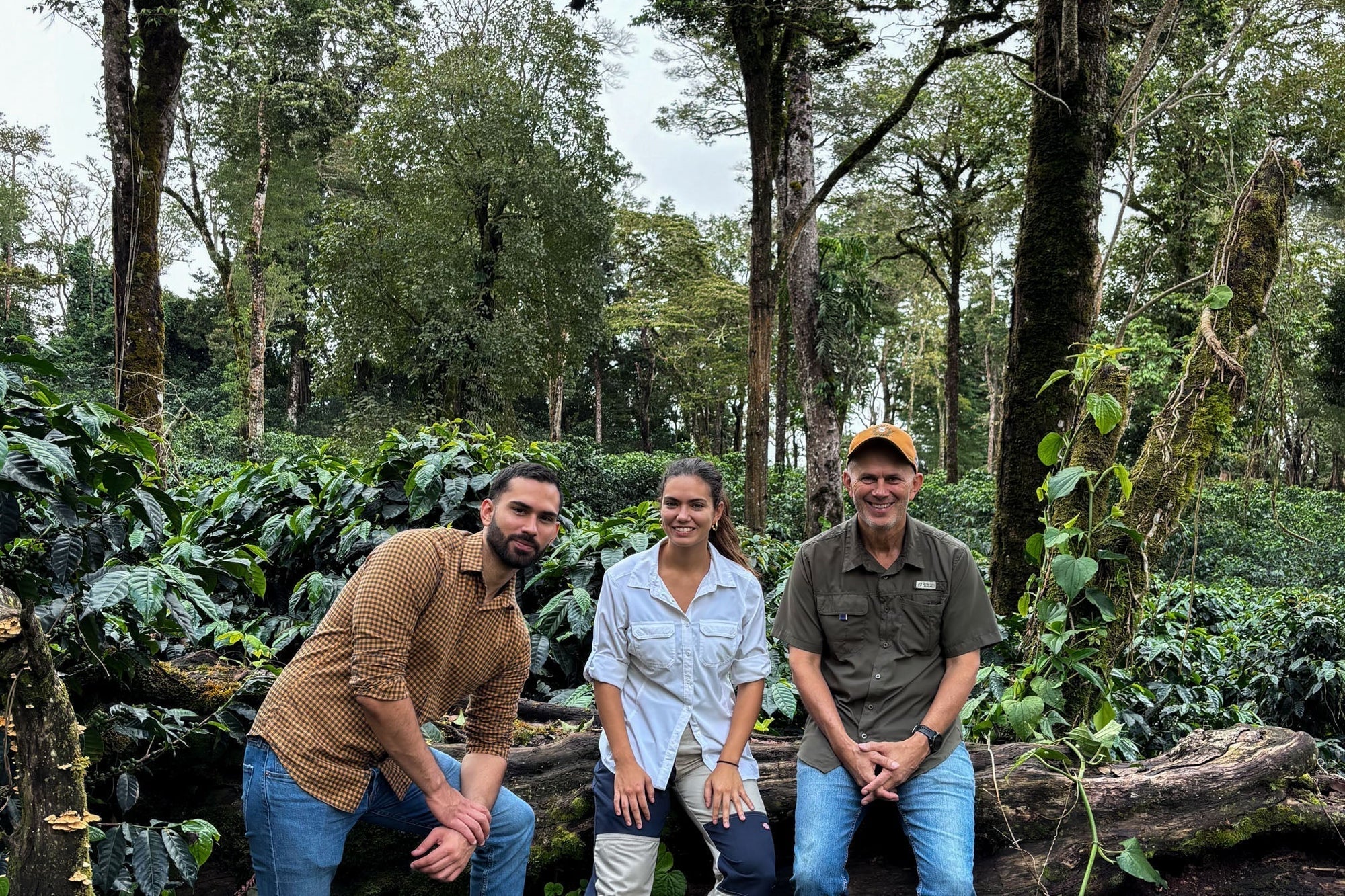
José Ignacio “Pepe” Jijón is not a conventional coffee producer. Before Finca Soledad, he was a mountaineer, the first Latin American to summit the highest peak on every continent. That mindset, disciplined, patient, comfortable with risk, carried straight into coffee.
Around fifteen years ago he bought land above the Intag Valley with the intention of reconnecting with Ecuador’s natural landscape. The area had been impacted by mining and deforestation, so restoration came first. Thousands of trees were replanted. Coffee followed later, and even now only a small portion of the farm is dedicated to production.
Pepe’s focus has always been on rare varieties and precise post-harvest rather than scale. Sidra, Typica Mejorado and Gesha are cultivated carefully at altitude, with an emphasis on expressing place rather than chasing volume. His coffees have become highly sought after in specialty circles, not because they’re flashy, but because they’re distinct and consistently refined.
There’s also a very real generational layer to the story. Pepe’s son, José, has worked both on the farm and abroad in specialty coffee, seeing the industry from the production side and the café floor. Like many young people in rural coffee regions, he’s weighing what his future looks like. That tension, between legacy and independence, sits quietly behind the farm’s success.
For Pepe, the aim is straightforward. Produce exceptional coffee, restore and protect the land, and prove that high-quality farming in places like Intag can be both environmentally responsible and economically viable. The “Wave” processes are an extension of that thinking, controlled, intentional, and designed to honour what the farm already gives.

The Region

Finca Soledad sits high above Ecuador’s Intag Valley in Imbabura Province, close to the Colombian border. At around 1550 metres above sea level, it’s true Andean cloud forest, cool temperatures, heavy mist, and slow-moving seasons.
That constant cloud cover stretches cherry development, which tends to show up in the cup as layered acidity and defined sweetness rather than sharp, fast ripening brightness. It’s a region that rewards patience. The environment does its part, but only if the farming and post-harvest are handled carefully.
Intag is also one of the more biodiverse corners of the Andes, dense canopy, epiphytes, native forest, and a long history of tension between conservation and mining. Many farms in the valley have disappeared over the years, either from economic pressure or environmental strain. What remains is a smaller group of producers focused on quality over volume.
That context matters. These coffees aren’t coming from an easy landscape. They’re grown in a remote, humid, ecologically sensitive region where precision in picking, drying, and stabilisation isn’t optional. Without that precision, the results would be very different.

An Invitation to Experience Finca Soledad
These two Special Reserve lots are a sharp snapshot of what makes Finca Soledad so respected in specialty coffee. Rare varieties, deliberate processing, and a producer who treats post-harvest as seriously as cultivation.
Volumes are tight, as you’d expect from a small, high-altitude farm focused on quality over scale. Once they’re gone, they’re gone.
If you’re drawn to expressive fruit and sweetness, start with the Wave Honey Sidra. If clarity and florals are more your pace, the Wave Washed Gesha will make sense straight away. Brew them side by side if you can. Same farm, same altitude, different decisions, different outcomes.
That’s the interesting part.
For those interested in establishing a wholesale coffee partnership, head to our wholesale page and fill out the contact form. If you're a venue looking to purchase casually or feature us as a guest roaster, visit Ordermentum to connect and view our price list.